Friday, March 18, 2016

Chapter 6 | Song and Yuan Dynasties

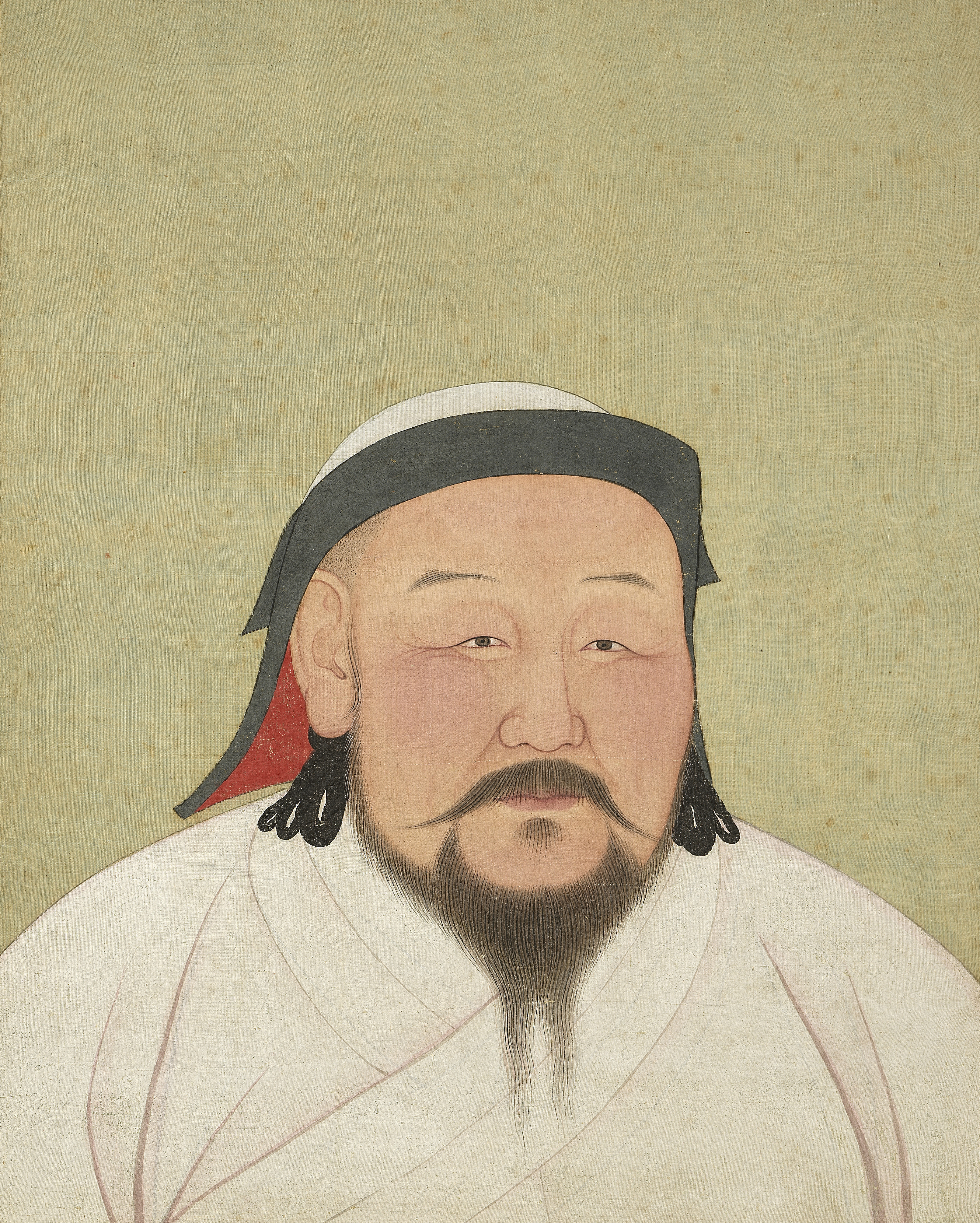
A painting of Kublai Khan, as he would have appeared in the 1260s by a Nepalese artist and astronomer Anige.
Song : This dynasty was divided into two distinct periods, Northern and Southern. It was the first government in world history to issue banknotes or true paper money nationally, and the first Chinese government to establish a permanent standing navy. This dynasty also saw the first known use of gunpowder, as well as the first discernment of true north using a compass.
Neo-Confucianism :attempt to create a more rationalist and secular form of Confucianism by rejecting superstitious and mystical elements of Daoism and Buddhism that had influenced Confucianism during and after the Han Dynasty.
Porcelain : a ceramic material made by heating materials. The manufacture of porcelain became highly organized and the kiln sites excavated from this period could fire as many as 25,000 wares. Some porcelains were more highly valued than others in imperial China. We can identify the most valued types by their association with the court, either as tribute offerings, or as products of kilns under imperial supervision.
Mongol : The Mongol Empire emerged from the unification of nomadic tribes in the Mongolia homeland under the leadership of Genghis Khan, who was proclaimed ruler of all Mongols in 1206. The empire grew rapidly under his rule and then under his descendants, who sent invasions in every direction.
Yuan : was the empire or ruling dynasty of China established by Kublai Khan, leader of the Mongolian Borjigin clan. Although the Mongols had ruled territories including today's North China for decades, it was not until 1271 that Kublai Khan officially proclaimed the dynasty in the traditional Chinese style. The Yuan dynasty is considered both a successor to the Mongol Empire and an imperial Chinese dynasty. It was the khanate ruled by the successors of Möngke Khan after the division of the Mongol Empire. In official Chinese histories, the Yuan dynasty bore the Mandate of Heaven.
Khubilai Khan : was the fifth Khagan (Great Khan) of the Mongol Empire (Ikh Mongol Uls), reigning from 1260 to 1294, although it was only nominally due to the division of the empire. He also founded the Yuan dynasty in China as a conquest dynasty in 1271, and ruled as the first Yuan emperor until his death in 1294.
Marco Polo : Dictated The Travels of Marco Polo/The Description of the World to his cell mate who wrote it. He was born in 18th century into a wealthy merchant family. While traveling east, he was welcome by Kublai Khan to China and Kublai Khan entrust him to bring back more about Christianity and 100 Priests and Holy Oil. He served as an adviser for Kublai Khan when he came back to China the second time around.

Chapter 5 | Tang China

A digital reconstruction of Chang'an (©2006 Department of Architecture, NUS, Singapore)

Buddhism : The faith spread slowly from traders and Han contact within Central Asia. The Chinese turn to Buddhism because of what the faith represent. It was founded by Gautama Buddha who was a prince.
Sui : A dynasty origin in the Wei Valley and its brief rule was similar to the Qin. They rebuilt the Great Wall and created extensive network of roads and canals. The new Emperor also limited 59 princes of the Zhou royal family.
Tang : A dynasty that held an era of the greatest age of Chinese Poetry. They maintained the civil service system by recruiting scholar officials through standardized exams and recommendation from officials. The Tang control extended further west than any previous dynasty, stretching from Northern Vietnam, Northern Korea, and the Kashmir borders.
Chang'an : The central city that is heart of the trade route for China because it's the last stop on the silk road. It is built in a way that it impresses visitors of the size of the building and city.
Silk Road : Network of Trade Routes that connected China to the mediterranean sea. IT play a significant factor in the development of civilization in the country using the route.
Empress Wu Zetian : Concubine of Emperor Tailing and married his successor. After the successor's death, she took over as administer of the court which is equal in position to the emperor. She expended the Chinese empire into deep Central Asia and engaged in a series of wars with Korea. She also push the belief of Buddhism among her people because in confucius belief, she shouldn't be in power.

Chapter 4 | Qin-Han Dynasties

Xiongnu riders crossing a river

Qin : They were the poorest, smallest, and most remote but the frontier location protected them from the other states' invasion. They built up their army and strictly disciplined their people for war. They made use of the state's poverty and pleasant base and stressed the importance of frugality, hard work, and discipline, which kept them are of degenerative luxury that was growing in other's state with rise of merchant and urban culture. This kept them free of literature, music, and theater. In the meantime they also despise merchant and intellectuals and considered them boat rockers.
Han : Liu Bang became the first emperor for this dynasty. He rebel because he let the conscript laborers escape and that was punishable by death. He use the Confucian precept that government exist to serve the people and that unjust ruler should forfeit both the mandate of Heaven and the support of the ruled. When he took over, he lowered taxes, abolished controls of travel, education, and thoughts. He encouraged learning because it build educated men with talent. He also kept surplus grains in control so when a time come when growth wasn't as good, there's food for the people. This wasn't popular but it was effective.
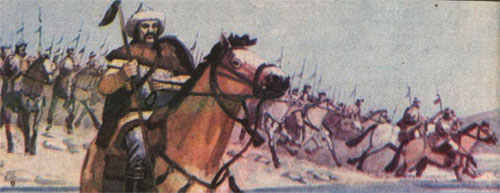
Xiongnu : Chef nomad group, that was possibility Turkish people, whose mounted mobility and cavalry tactics. They were against Wu Di who was the Emperor of China at the time.
Great Wall : Build during the Qin Dynasty to prevent nomad invasions. Ironically, it wasn't very effective in doing it but it serve as a symbolic affirmation of empire and as a statement of territorial and sovereign limits.
Eurasia : Linked by the silk road, Zhang Qian was captured by the Xiongnu and it took him 10 years to report back but he report the first news of Rome. The partisans were the middleman between the trade and they fear that when Rome and China meet directly, they would crush them.
Civil Service Examinations : Use to select candidates for the state bureaucracy. Liu Bang held examinations to select the fittest who master the confucian classics. It is hard for the poor to pass but it was possible. It's also where the saying "Rags to Riches in three generations" came around.

Chapter 3 | The Zhou Dynasty

A portrait of Confucius by the Tang dynasty
artist Wu Daozi (680–740)

Zhou : The dynasty that follows the Shang dynasty. They overthrew the Shang with slave rebellions around 1050 B.C. They were guards of the western frontier in the Wei Valley. After the conquest, they acquired most of the Shang culture and technology. They said the Shang lost the 'Mandate of Heaven' by their misgovernment, so the Heaven command them to take over.
Warring States : A period that last for 550 years that began around 453 B.C. It was a period of contest among the former Zhou vassals. There was constantly wars and because of that, technology advanced quickly.
Five Classics : Five Pre-Qin Chinese Books that form part of the traditional Confucian canon. The classics are : Classic of poetry, Book of Documents, Book of Rites, I Ching, and Spring and Autumn Annals. They were text studied by confucian scholars who wish to take the civil exam to become an elite.
Kongfuzi : The Chinese name for Confucius, it literally translate to Master Kong. He was a philosopher emphasized personal and governmental morality, correctness of social relationships, justice and sincerity.

Five Relationships : It is designed by Confucius and it's purpose is to create a culture of social harmony by inculcating the Confucius values.
Rule <- Subject
Father <- Son
Husband <- Wife
Elder Brother <- Younger Brother
Friend = Friend


Chapter 2 | Prehistory and Shang Dynasty


Oracle Bone: Ox scapula with a divination inscription from the Shang dynasty, dating to the reign of King Wu Ding
Neolithic : It is known as the New Stone Age, and began in China around 10,000 B.C. It was a rapid improvement and new variety in finely made stone tools. While stone tools continued to be used, clay and bone were increasing and towards the end, metal began be used.
Xia : (C.2070 - 1600 B.C.) the first dynasty of historical China established by Yu the Great. There is little evidence of this dynasty actually existing but the Shang dynasty has to begin somewhere. The legend has it that Yu the Great prevented floods by criss crossing the Yellow River Plains with a stick. Grateful, the people from the nine regions of territory divided under his rule to pay homage.
Shang : (C.1558 - 1046 B.C.) Ruled from several successive walled capitals. Cultural remains suggested their political domains were limited to the central Yellow River Plains. They kept slaves, mainly war captive from around the Shang borders. They were important part of the agricultural work force and built cities and palaces. The Shang also developed a highly accurate calendar. Hunting also remained a subsidiary source of food in addition to domesticated cattle, pigs, and poultry.
Sage King : The title given to the five former Kings who have retired from active duty and spend their time developing their divine powers.
Ancestral Culture : It revolves around the worship of the deified ancestors of people with the same surname. Ancestors are considered embodiments or reproducers of the creative order of Heaven.

Thursday, March 17, 2016

Chapter 1 | East Asian : Common Ground and Regional Difference

A 1944 map of China Proper By Walt Disney Studios in cooperation with the Office of War Information

Middle Kingdom : The Chinese name for China, which is Zhonggou.
The people of China believed their empire occupied the middleof the earth, surrounded by barbarians.
Wet Rice Agriculture :  the cultivation of rice by planting on dry land, transferring the seedlings to a flooded field, and draining the field before harvesting. It is an very labor intensive job that requires the farmer to work from dawn to dusk so they could maximum the harvest yield. It is also the main source of food for China because of the harvest yield. The land the farmer work on is typically own by someone else and the farmer gets enough to feed themselves and the rest goes back to the landowner who would then sell it.
China Proper : This is located on the east coast and it is an historical heartland of China. This is a name given by the western countries during the Qing dynasty.